

Update on Monday’s Planned Detonation in Iowa
Many of you may have seen reports about a planned detonation in Iowa. I want to share what we know about the U.S. Army’s planned lead azide detonation and where Illinois residents can find updates.
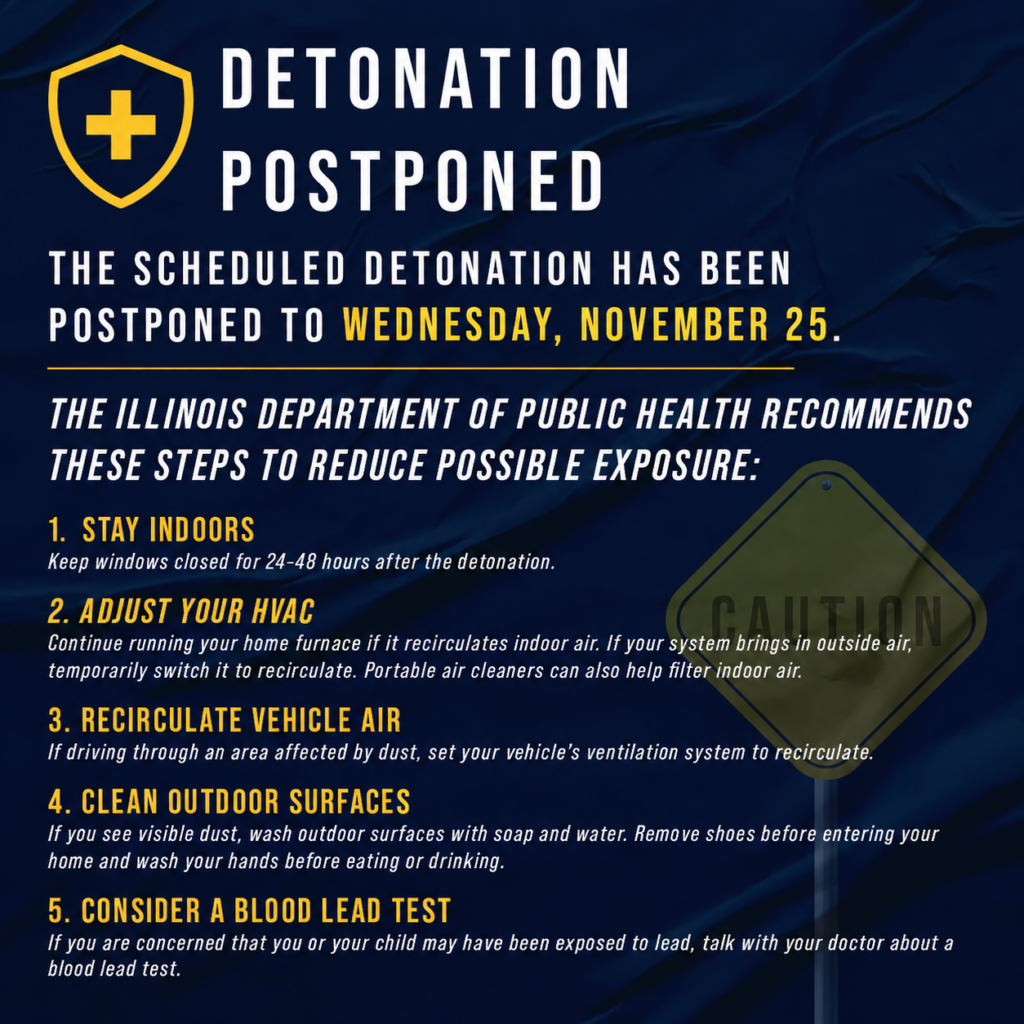
The U.S. Army initially planned to detonate the hazardous material on Friday, November 20, before postponing the operation until Monday, November 23. A federal appeals court then temporarily stayed the U.S. Environmental Protection Agency’s (EPA) emergency permit. Federal officials have since said the Army intends to proceed under separate emergency authority, and the Army has rescheduled the detonation for Wednesday, November 25 at 9 a.m.
The Army plans to dispose of degraded lead azide that it determined was unsafe to move. The Army has said that a controlled detonation at the site in Iowa poses the lowest risk to the public and that a forecast drop in temperatures could make the material more unstable.
Illinois EPA and the Illinois Department of Public Health are monitoring the situation because the detonation could send lead dust into the air. The Army’s initial projections showed that some our communities could be affected. Those projections may change as the Army updates its maps ahead of the operation.
My team and I will be following this closely and will keep you posted as we learn more. I’ll share what we know and pass along any updated guidance from health officials so you know what steps to take to protect yourself and your family.
Below are some precautions for residents in potentially affected areas
The Illinois Department of Public Health recommends these steps to reduce possible exposure:
- Stay indoors and keep windows closed for 24 to 48 hours after the detonation.
- You can keep running a typical home furnace that recirculates indoor air. If your system pulls in outside air, consider switching it to recirculate temporarily. A portable air cleaner can also help filter indoor air.
- If you need to drive through an area affected by dust, set your vehicle’s ventilation to recirculate.
- Wash outdoor surfaces with soap and water if you see visible dust. Take your shoes off at the door and wash your hands before eating or drinking.
- If you’re concerned that you or your child may have been exposed to lead, talk with your doctor about a blood lead test.
Check the Army’s updated maps and follow guidance from state and local officials as Monday approaches.
U.S. Army updates and maps | Illinois Department of Public Health guidance
Illinois Needs a Closer Look at Flock Cameras
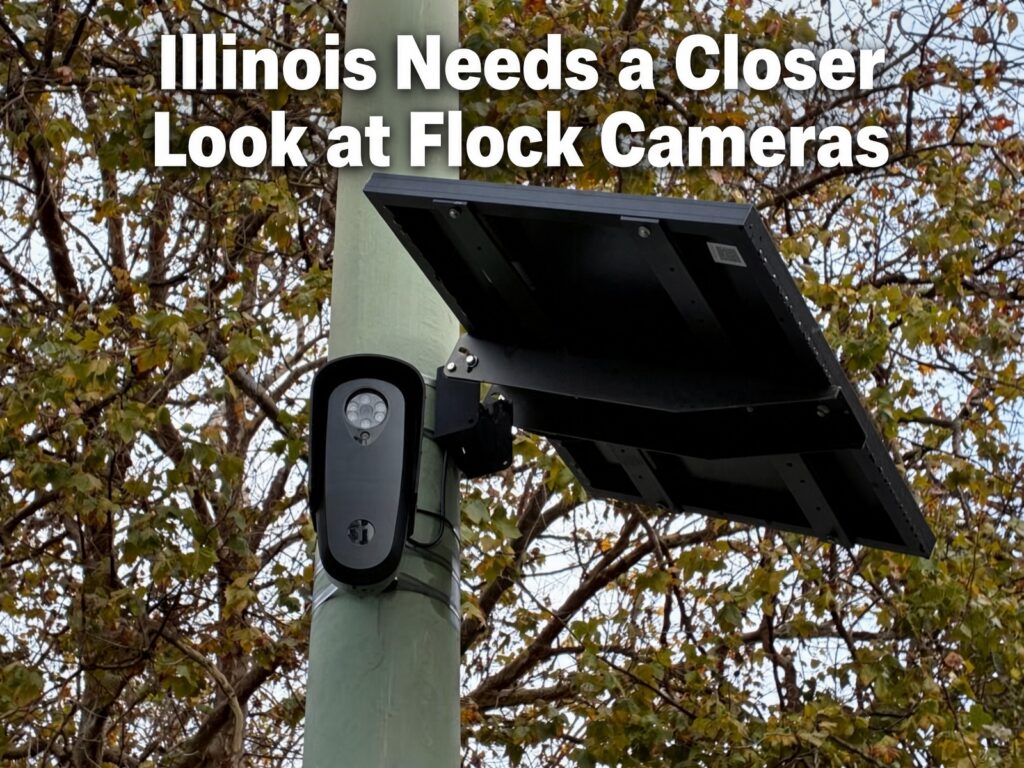
Public safety is one of my critical responsibilities as a state senator. So is protecting your privacy. As more Illinois communities install Flock cameras and other automated license plate readers, we need to take a closer look at how these systems collect, store and share information about where people drive.
Across Illinois and around the country, residents have called for tighter restrictions on these cameras, and some have called for outright bans. Reports of unauthorized searches and improper data sharing have given people good reason to ask who can access their information and how it’s being used.
I spoke against using these cameras when I was mayor of Dixon, and I still oppose their public use in the vast majority of scenarios. I certainly understand that license plate readers can help police investigate crimes and recover stolen vehicles. I also believe you should be able to go about your day without worrying about who can look up where you’ve been. Government has a long history of abusing power, and not just in American—across the ages of human history.
We need an approach that gives law enforcement the tools it needs to keep our communities safe while protecting the privacy and constitutional rights of Illinois residents, and we must err on the side of protecting your privacy.
Illinois Must Review Its CDL Program After Deadly Missouri Crash

A mother and her two young children were killed in a Missouri crash involving a semitruck driven by Eldar Skander, a Ukrainian national who held a non-domiciled commercial driver’s license issued by Illinois. Their deaths raise a question our state needs to answer: How did Skander qualify for a license that allowed him to operate a truck that can weigh up to 80,000 pounds?
Months before the crash, a federal audit found that nearly 20 percent of the Illinois non-domiciled CDLs it reviewed had been improperly issued. Federal reviewers identified licenses issued without adequate verification of lawful presence and others that remained valid beyond the expiration of a driver’s documented lawful presence. Illinois officials publicly disputed the audit’s findings and defended the state’s licensing procedures.
Federal immigration authorities have since questioned Skander’s legal status, raising concerns about whether he was eligible to obtain or keep his Illinois CDL. As investigators work to determine what happened, Illinois should explain what documentation it relied on when it issued his license and how it verified that he met federal requirements.
My Senate Republican colleagues and I are joining Missouri Gov. Mike Kehoe in calling for a full review of Illinois’ commercial licensing procedures. I’m asking the Pritzker administration to work with the Secretary of State’s office and federal officials to strengthen eligibility checks and review existing non-domiciled CDLs. Any license found to have been improperly issued should be corrected or revoked in accordance with federal requirements.
Illinois has a responsibility to make sure every commercial driver it licenses is qualified to operate on our roads. This is not the first time we have had scandal in Illinois over how we issue CDLs, and many in the General Assembly have warned we might be on course for another disaster. Now we owe this family answers, and we owe the public a clear account of what Illinois will do to address any failures the review uncovers.
Data Centers and the POWER Act: What’s at Stake for Illinois

As data center development expands across Illinois, it is time we begin to have serious discussions on their impact on our communities. The people of Illinois need to have a say on where these projects go and how they operate.
Local governments need to be able to hold public hearings and set standards for a facility’s size, location, water use and noise.
Residents have to be able to see how much water a data center uses and how that demand could affect their local supply. I also personally oppose using tax incentives for these projects. If a project does receive state or local tax incentives, homeowners in the host community should share in the benefits through rebates or credits.
As Veto session continues, state lawmakers will also discuss the POWER Act which would effectively limit new power generation for data centers to wind, solar and battery storage. We have to support keeping nuclear power and natural gas available alongside those options so Illinois can meet growing demand and keep the grid reliable. It is impossible to provide affordable electricity to you without respecting that the economic math requires us to invest in many forms of reliable power generation.
To that point, data centers should pay their share for the power they need. We cannot be closing down energy generation options such as natural gas as Illinois families and small businesses already have enough pressure on their electric bills. And we cannot expect companies to invest in power generation while simultaneously pushing state energy policy that limits their ability to invest nuclear and reliable natural gas.
Fair Funding for Every Illinois School
Chicago Public Schools (CPS) is asking Springfield for hundreds of millions of dollars outside the state’s school funding formula. Before lawmakers consider that request, I think we need to ask what it would mean for other schools that are still waiting for the funding they need.
Illinois’ bipartisan Evidence-Based Funding formula was designed to answer a simple question: Which schools need the most help? This year, Chicago is one of 270 school districts and other education agencies in the highest-need tier. CPS expects to receive about $65.9 million of the $350 million in new funding the state is providing through the formula.
Chicago students deserve that investment. So do students in underfunded schools across northern Illinois and throughout the state. If we set aside the formula for one district, every other district has reason to wonder whether it’ll get a fair shake the next time it needs help. We do not need to give CPS more money.